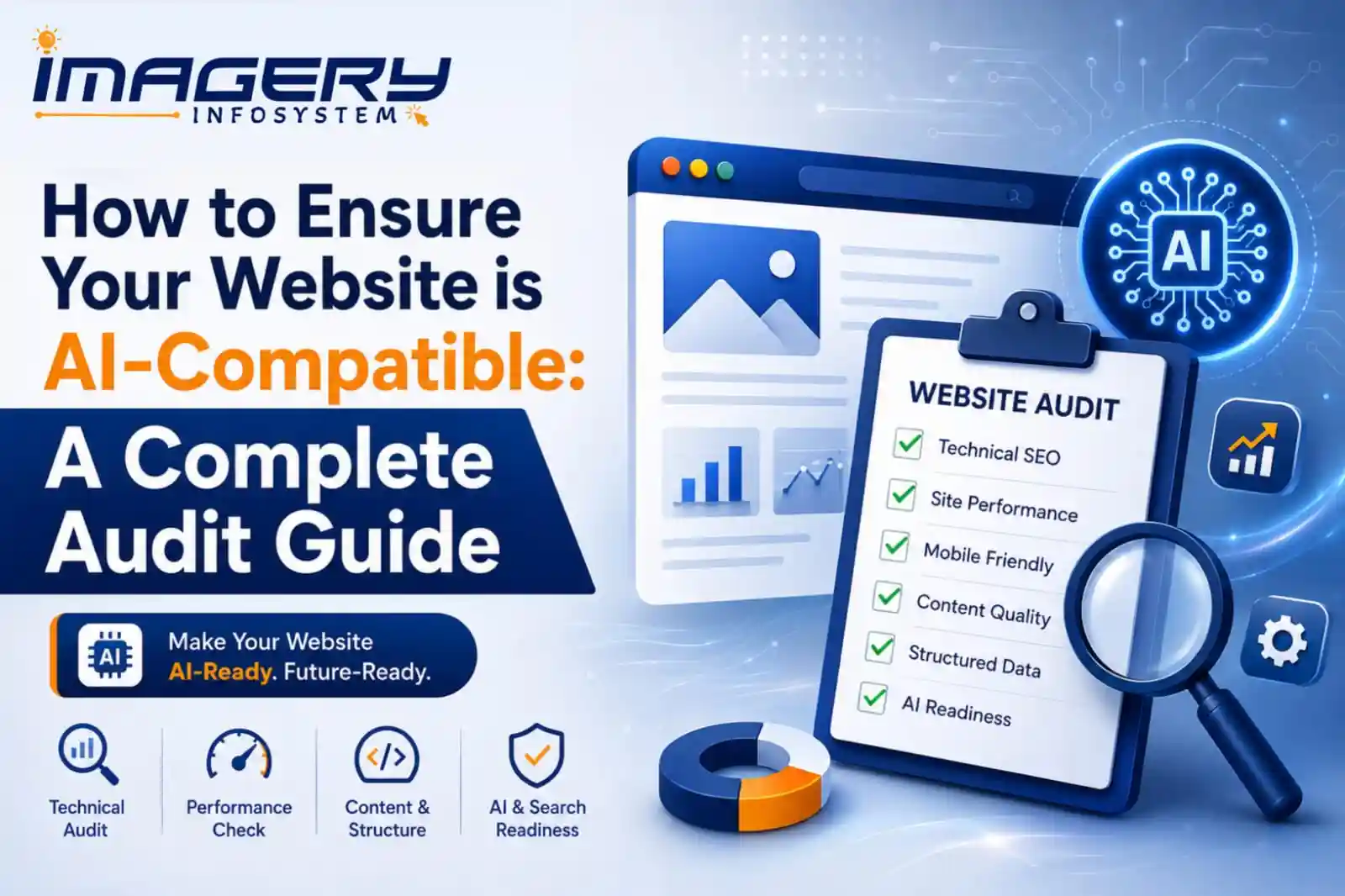
Artificial Intelligence is transforming the way people discover information online. Traditional search engines are evolving into AI-powered answer engines that can understand context, summarize content, and provide direct responses to user queries.
With platforms like AI-powered search assistants, large language models (LLMs), and intelligent search systems becoming increasingly popular, businesses must adapt their websites to remain visible and competitive.
The question is no longer whether your website is search-engine friendly—it’s whether your website is AI-compatible.
In this comprehensive guide, we’ll explore how to audit your website for AI compatibility and ensure it’s prepared for the future of digital discovery.
What Does AI-Compatible Mean?
An AI-compatible website is structured in a way that allows AI systems to:
- Crawl content efficiently
- Understand page context
- Identify entities and topics
- Extract accurate information
- Reference content confidently
- Deliver better search visibility
Unlike traditional SEO, AI optimization focuses heavily on clarity, structured information, authority, and machine readability.
Why AI Compatibility Matters
AI-driven search experiences are changing how users interact with information.
Modern AI systems often:
- Summarize website content
- Generate direct answers
- Recommend businesses
- Provide comparison results
- Interpret user intent more accurately
Businesses that optimize for AI compatibility gain:
- Better visibility
- Increased authority
- Improved discoverability
- Enhanced user experience
- Future-proof digital presence
Step 1: Check Website Crawlability
If AI systems cannot access your content, they cannot understand or reference it.
Audit Checklist
✅ Proper robots.txt configuration
✅ XML sitemap available
✅ No unnecessary crawl restrictions
✅ Pages return HTTP 200 status
✅ Internal links are accessible
Common Issues
- Broken links
- Blocked pages
- Incorrect robots.txt directives
- Missing sitemaps
A well-structured website allows AI systems and search engines to discover content efficiently.
Step 2: Verify Structured Data Implementation
Structured data helps AI understand the meaning of your content.
Important schema types include:
Organization Schema
Provides information about your business.
Local Business Schema
Essential for location-based businesses.
Service Schema
Explains your services clearly.
Article Schema
Helps AI understand blog content.
FAQ Schema
Improves answer extraction opportunities.
Breadcrumb Schema
Provides content hierarchy.
Structured data acts as a roadmap for AI systems.
Step 3: Evaluate Content Quality
AI systems prioritize high-quality, trustworthy content.
Ask yourself:
- Is the content original?
- Does it solve user problems?
- Is it well-structured?
- Is it factually accurate?
- Is it easy to understand?
Best Practices
Use:
- Clear headings
- Short paragraphs
- Bullet points
- Real-world examples
- Expert insights
High-quality content increases the likelihood of being referenced by AI systems.
Step 4: Improve Topic Authority
AI models evaluate topical expertise.
Instead of publishing random content, create topic clusters around your expertise.
For example, a technology company might publish content related to:
- Website Development
- Software Development
- AI Solutions
- Digital Marketing
- Cybersecurity
- Business Automation
This helps establish authority within specific subject areas.
Step 5: Optimize Website Speed
Performance directly impacts user experience and crawl efficiency.
Audit Areas
- Core Web Vitals
- Mobile performance
- Server response times
- Image optimization
- Code optimization
Recommended Targets
- Fast page load times
- Responsive mobile experience
- Minimal layout shifts
A fast website benefits both users and AI systems.
Step 6: Review Content Structure
AI systems prefer content that is logically organized.
Ideal Structure
H1
  H2
     H3
  H2
     H3
Use:
- Descriptive headings
- Logical hierarchy
- Clear sectioning
This helps AI understand relationships between topics.
Step 7: Strengthen Internal Linking
Internal links help AI understand content relationships.
Example:
A blog about AI SEO should link to:
- Website Development
- Digital Marketing
- Technical SEO
- AI Solutions
Benefits include:
- Better crawlability
- Improved topic mapping
- Enhanced authority distribution
Strong internal linking creates a more understandable website structure.
Step 8: Optimize for Entity Recognition
Modern AI systems rely heavily on entities.
Entities may include:
- Companies
- Services
- Products
- Locations
- Technologies
For example:
Instead of repeatedly using generic terms like:
“our company”
Use:
“Imagery Infosystem”
Clearly identifying entities helps AI understand your business and its offerings.
Step 9: Create Helpful FAQ Sections
AI systems frequently extract information from FAQs.
Examples:
What is AI SEO?
AI SEO refers to optimizing content and website structures for AI-powered search systems.
Why is structured data important?
Structured data helps search engines and AI understand website content more accurately.
FAQ sections improve both usability and machine understanding.
Step 10: Check Mobile Compatibility
Most users access websites through mobile devices.
Audit:
- Mobile responsiveness
- Navigation
- Button accessibility
- Content readability
- Loading speed
Mobile-friendly websites provide better experiences for both users and AI evaluation systems.
Step 11: Implement AI-Friendly Metadata
Review:
SEO Titles
Clear and descriptive.
Meta Descriptions
Informative and concise.
Image Alt Text
Descriptive and keyword relevant.
Canonical URLs
Prevent duplicate content confusion.
Metadata helps AI systems interpret content more accurately.
Step 12: Enable LLM Accessibility
Large Language Models increasingly reference publicly accessible content.
Ensure:
- Public content accessibility
- Clear content ownership
- Proper attribution signals
- Structured information
- Consistent branding
Consider implementing:
- llms.txt
- Structured content hubs
- Knowledge-rich resources
These emerging practices improve AI discoverability.
Also Read This Blog- How Imagery Infosystem Helps Startups Launch Their Digital Journey
Common AI Compatibility Mistakes
Many websites still suffer from:
❌ Thin content
❌ Poor site structure
❌ Missing schema markup
❌ Slow performance
❌ Weak internal linking
❌ Inconsistent branding
❌ Poor mobile experience
❌ Limited authority signals
Fixing these issues significantly improves AI readiness.
AI Website Audit Checklist
Before publishing, verify:
✅ XML sitemap exists
✅ Structured data implemented
✅ Mobile responsive design
✅ Fast loading pages
✅ Clear content hierarchy
✅ Strong internal linking
✅ Entity optimization
✅ Helpful FAQs
✅ Optimized metadata
✅ Topic authority development
How Imagery Infosystem Helps Businesses Become AI-Ready
At Imagery Infosystem, we help businesses prepare for the future of AI-powered search and digital discovery.
Our services include:
Website Development
AI-friendly, scalable websites built for performance.
Technical SEO Audits
Comprehensive audits covering crawlability, indexing, and AI readiness.
Structured Data Implementation
Schema markup strategies that improve machine understanding.
Content Strategy
Authority-focused content designed for both users and AI systems.
Digital Transformation Solutions
Helping businesses adapt to emerging technologies and search trends.
By combining technical expertise with future-focused optimization strategies, we help businesses build websites that remain competitive in the evolving digital landscape.
Success Stories: Real Results from Imagery Infosystems’
Conclusion
The future of online visibility is increasingly influenced by artificial intelligence. Businesses that prepare now will have a significant advantage as AI-powered search experiences continue to evolve.
An AI-compatible website is not simply about rankings—it’s about making your content understandable, trustworthy, and accessible to both humans and machines.
By conducting regular AI audits and implementing the strategies outlined in this guide, businesses can improve discoverability, strengthen authority, and future-proof their digital presence.
The sooner you begin optimizing for AI compatibility, the better positioned your business will be in the next generation of search…
🚀 Contact Imagery Infosystems today and elevate your business to the next level!

By- Imagery Infosystem
India's Leading IT & Digital Solutions Company